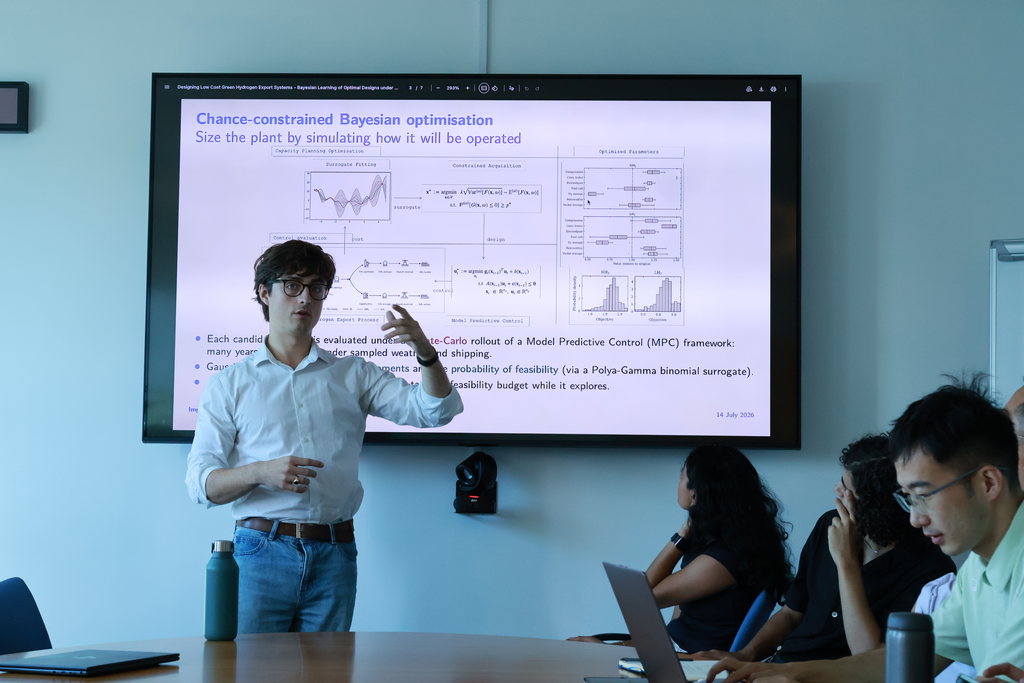
On the morning of 13 August, the UK Academic Exchange Delegation from the Department of Energy and Power Engineering, Tsinghua University, visited Imperial College London. Cameron Aldren and four other researchers from the Sargent Centre for Process Systems Engineering presented their work on the UK electricity market and energy policy, net-zero transition modelling, electrification planning, clean energy investment and financing, and hydrogen supply-chain optimisation. This was followed by an exchange on energy system modelling methods and regional differences in energy transitions. Associate Professor Ma Linwei presented a commemorative plaque to Imperial College London on behalf of the delegation.
Imperial College London
On the morning of 13 August, the UK Academic Exchange Delegation from the Department of Energy and Power Engineering, Tsinghua University, visited Imperial College London. Cameron Aldren and four other researchers from the Sargent Centre for Process Systems Engineering presented their work on the UK electricity market and energy policy, net-zero transition modelling, electrification planning, clean energy investment and financing, and hydrogen supply-chain optimisation. This was followed by an exchange on energy system modelling methods and regional differences in energy transitions. Associate Professor Ma Linwei presented a commemorative plaque to Imperial College London on behalf of the delegation.
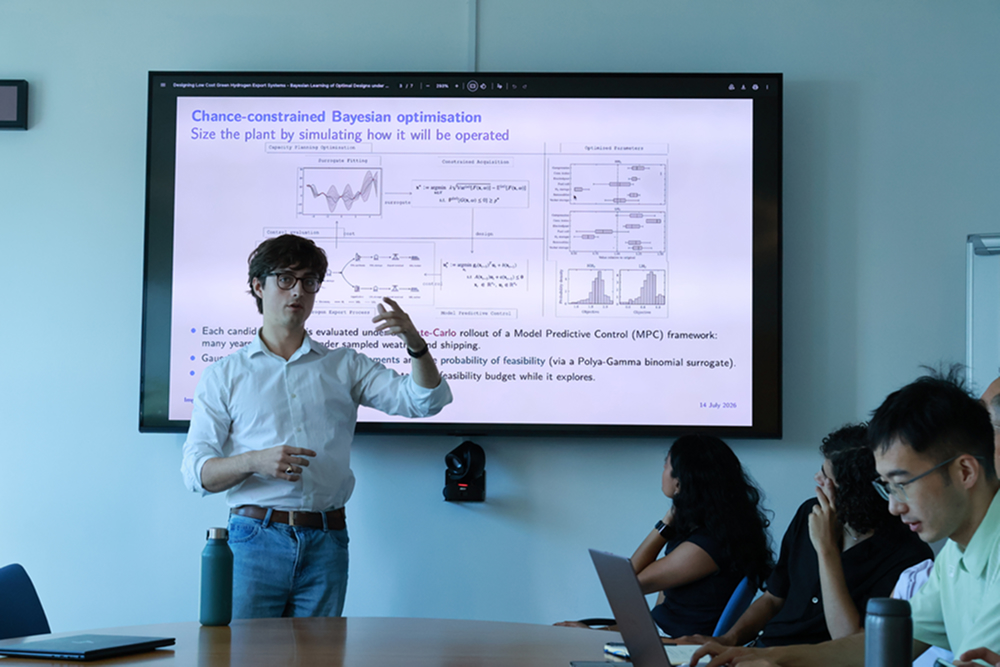
Cameron Aldren giving a research presentation
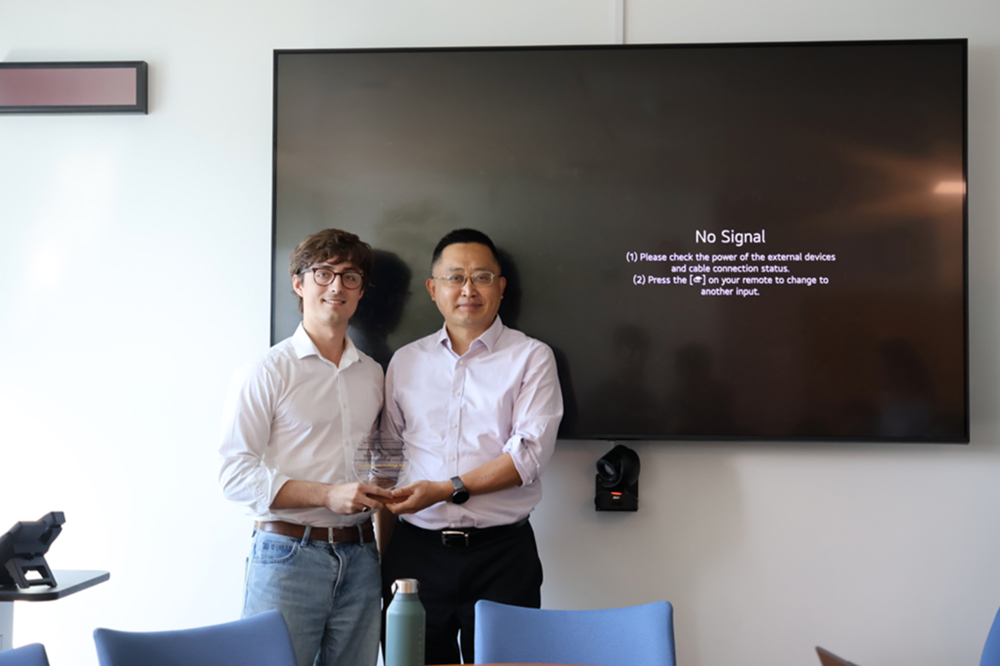
Associate Professor Ma Linwei presenting a commemorative plaque to Imperial College London
The delegation then visited Imperial College London's Carbon Capture Pilot Plant, where staff introduced the carbon capture process, teaching and experimental facilities, and process monitoring. The visit provided the delegation with a closer look at the engineering applications of carbon capture and its use in education and training.
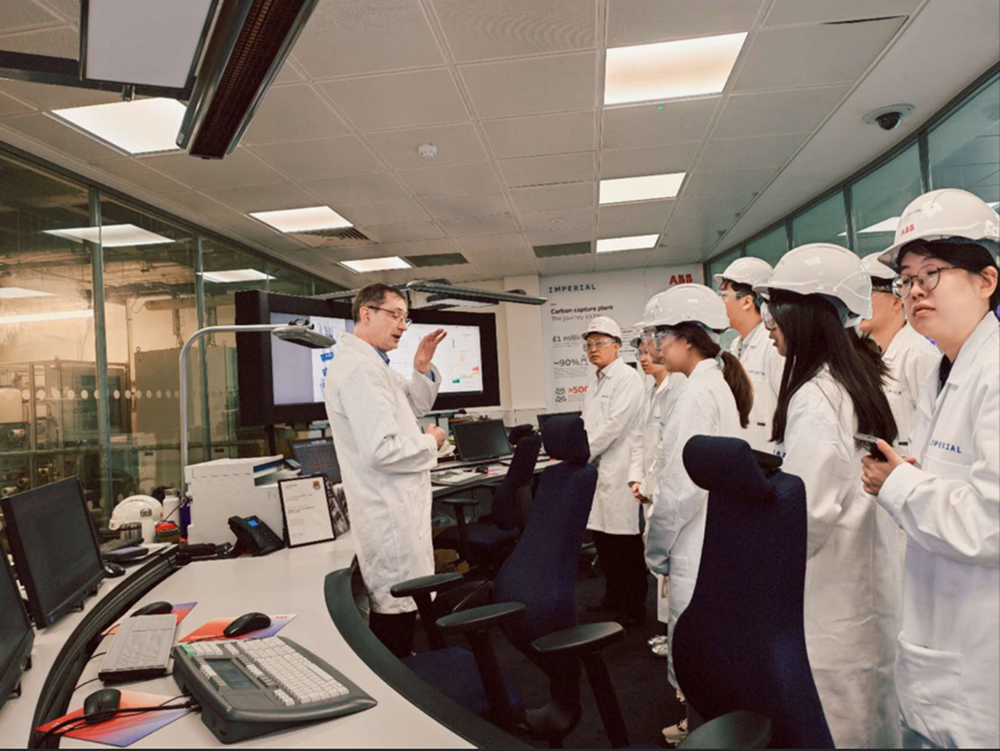
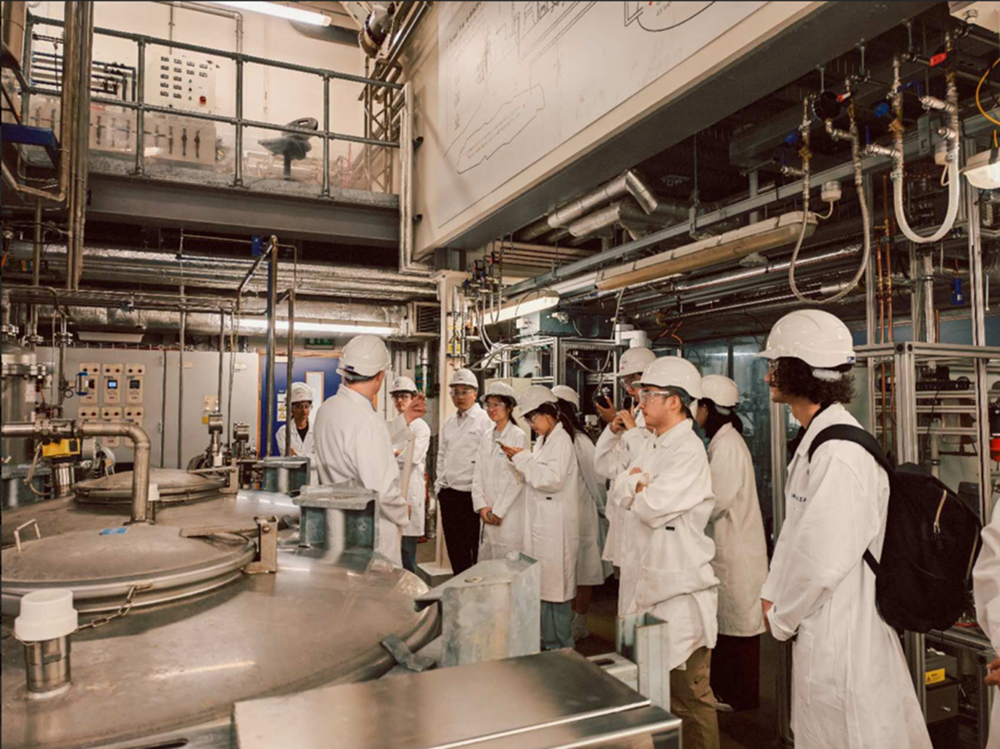
Visit to the Carbon Capture Pilot Plant
The delegation later joined researchers from the Grantham Institute – Climate Change and the Environment at Imperial College London for a discussion on the UK's energy transition. Dr Gbemi Oluleye and Dr Aidan Rhodes presented on low-carbon technology innovation and market mechanisms, and on the UK's energy transition strategy and electricity grid development, respectively. The two sides exchanged views on low-carbon technologies, power-system transition, energy storage, and international energy cooperation.
Group photo with participants from Imperial College London
The London School of Economics and Political Science
On the afternoon of 13 August, the delegation visited the London School of Economics and Political Science (LSE). The two sides first introduced their respective institutions and research interests. Associate Professor Ma Linwei gave an overview of the Department of Energy and Power Engineering, including its academic development, education and training, and international cooperation. Members of the delegation then briefly introduced their academic backgrounds and research areas.
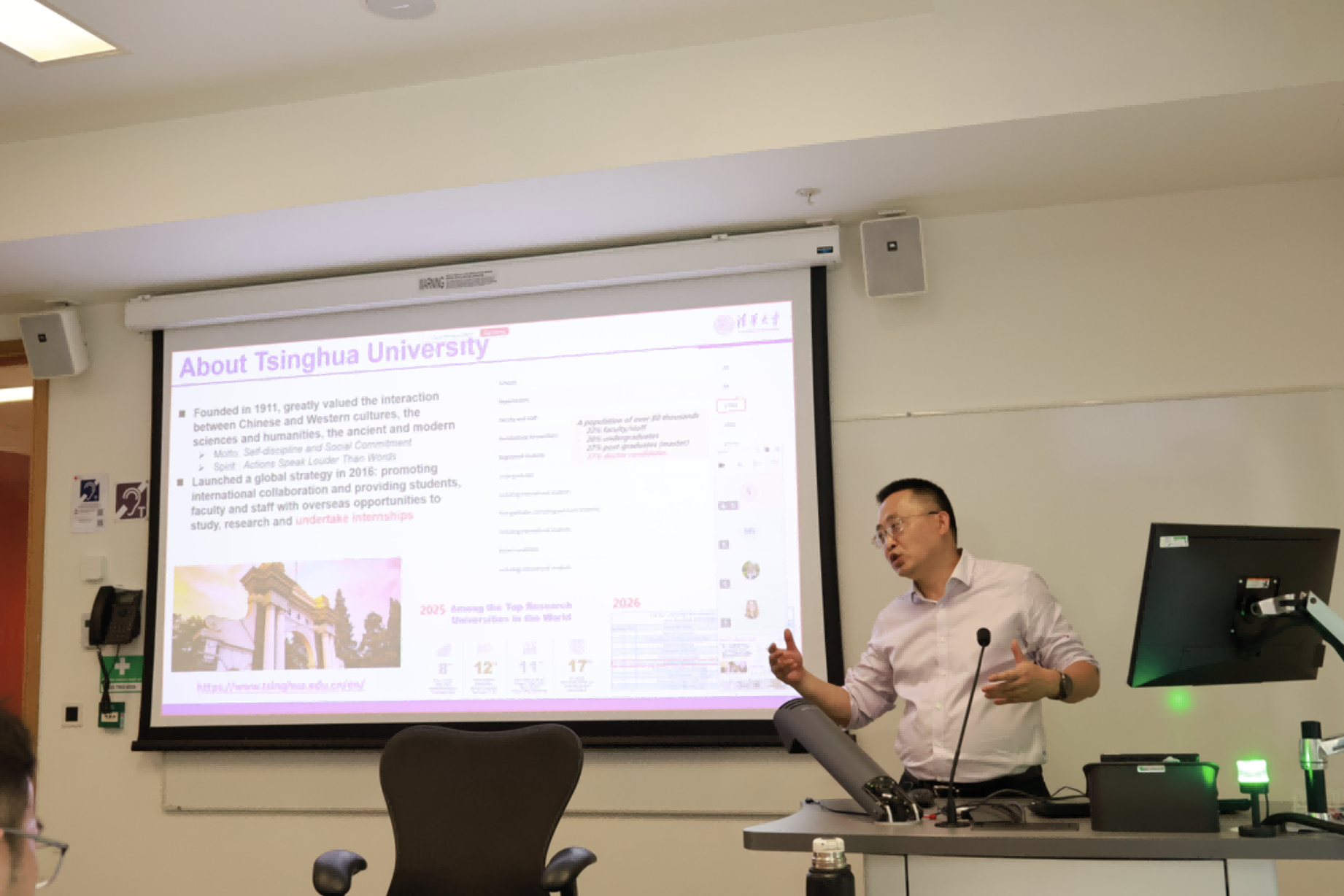
Associate Professor Ma Linwei introducing Tsinghua University and the Department of Energy and Power Engineering
During the research presentations, LSE researchers shared work on energy-transition governance in China and India and a cross-country comparison of coal transitions, examining how energy transitions differ across countries and regions from the perspectives of local governance, policy implementation, industrial development and social impacts.
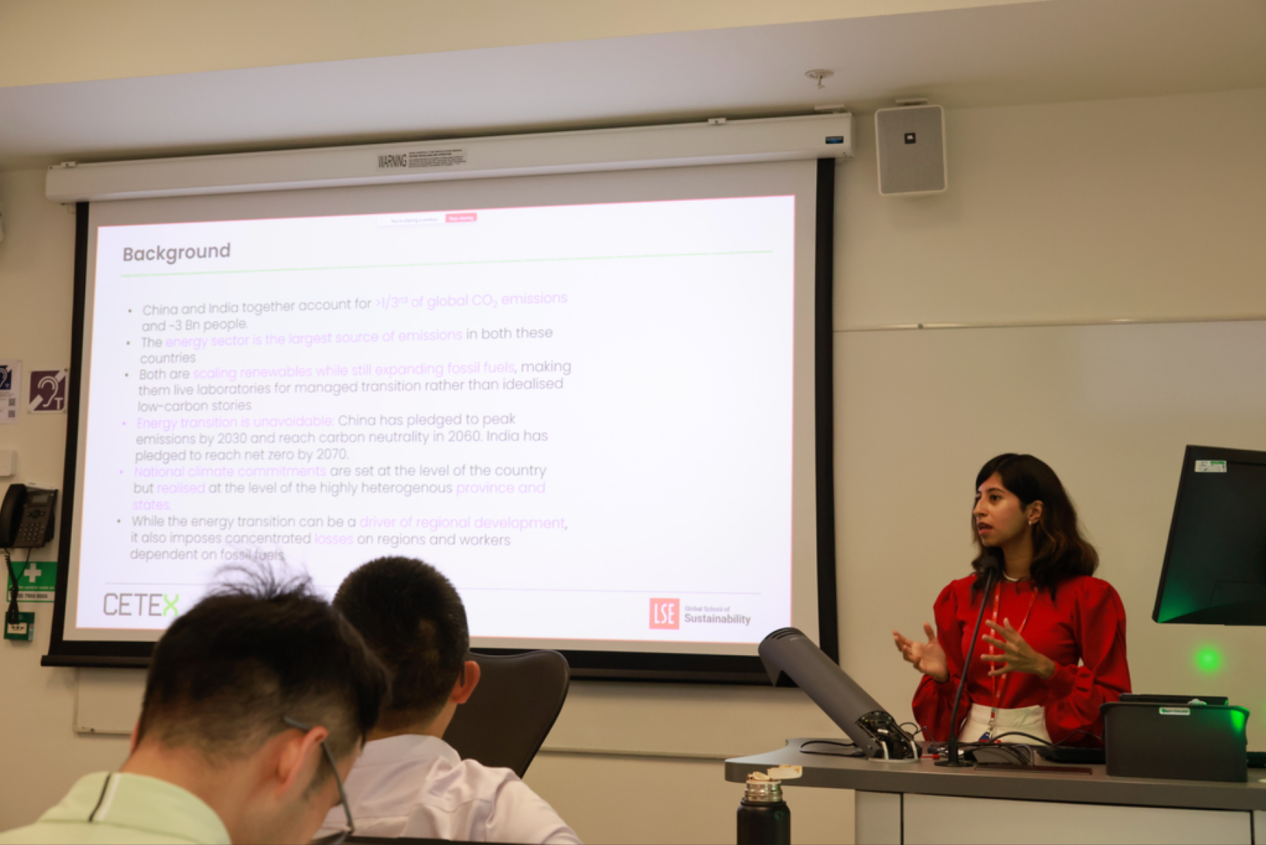
Research presentations by LSE researchers
Bob Ward, Policy and Communications Director at the Grantham Research Institute on Climate Change and the Environment at LSE, then introduced the Institute’s work on climate change, sustainable development and international collaboration. Building on existing collaboration between Tsinghua University and LSE, he also discussed opportunities for further interdisciplinary and cross-regional research cooperation. The two sides subsequently exchanged views on energy transitions in developing countries, international research collaboration and exchanges among early-career researchers.
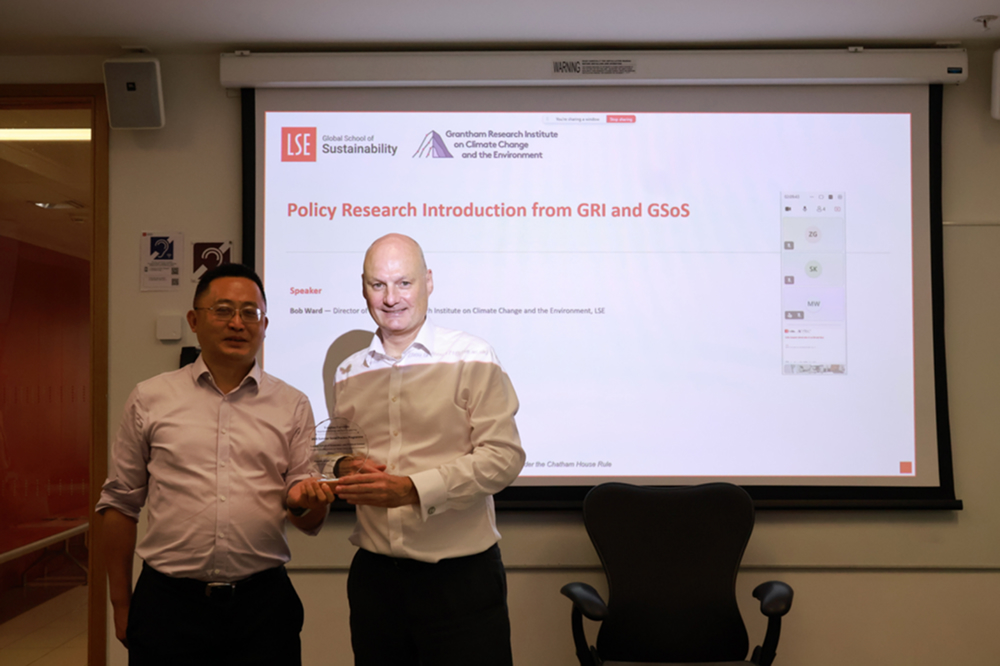
Associate Professor Ma Linwei presenting a commemorative plaque to LSE
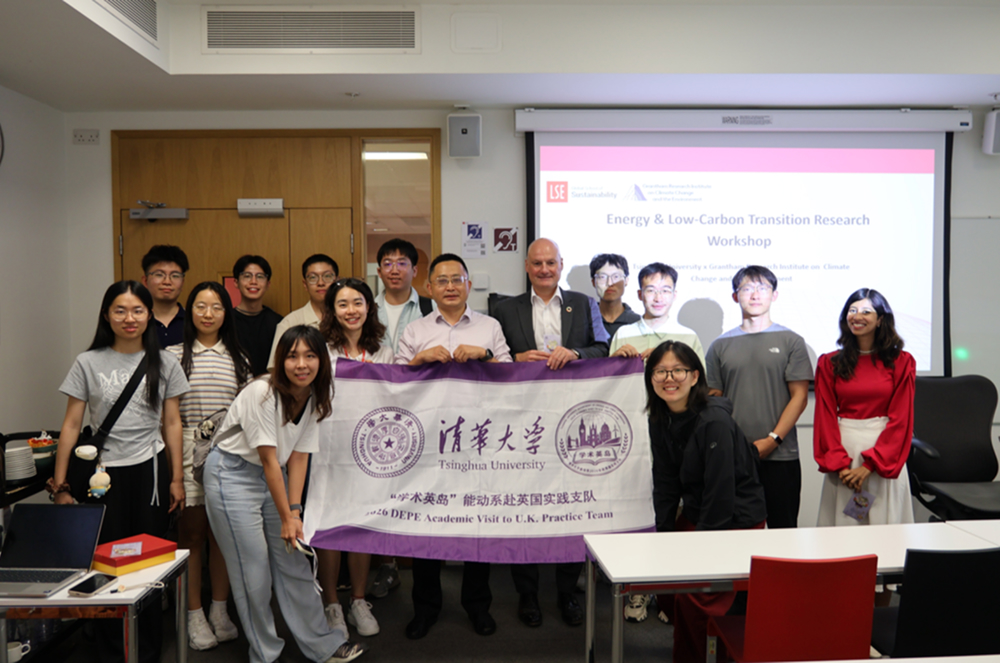
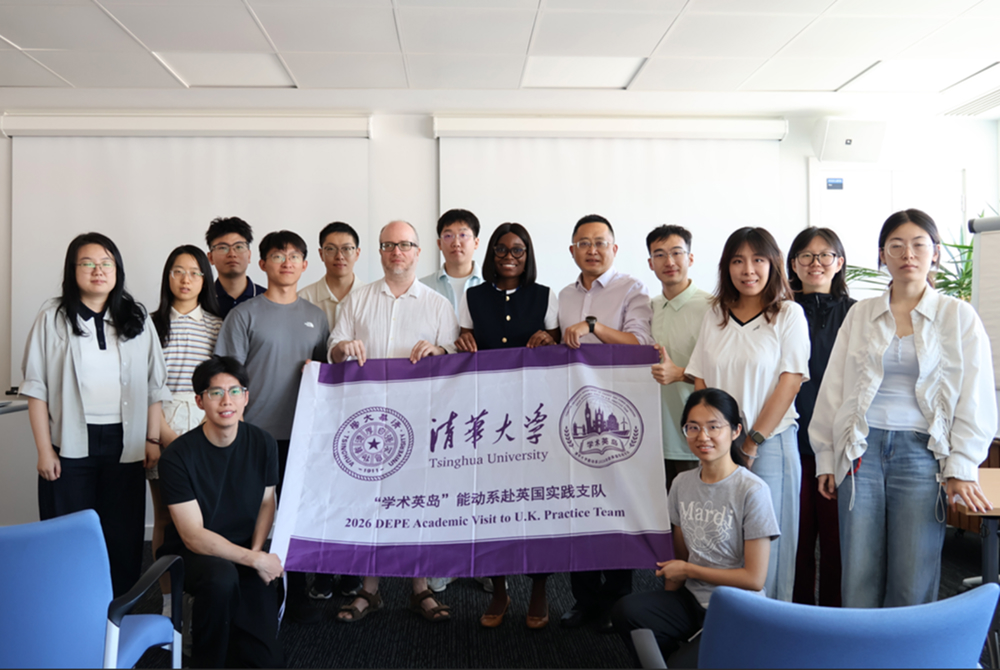
Group photo with participants from LSE
Through the day’s visits and discussions, members of the delegation broadened their understanding of energy-transition research and gained a clearer appreciation of the importance of interdisciplinary approaches. Addressing complex energy and climate challenges requires not only engineering and systems analysis, but also perspectives from economics, policy and the social sciences, with solutions tailored to the specific contexts of different countries and regions.
University of Oxford
On the morning of 18 August, the delegation visited the University of Oxford. The programme began with an exchange session with early-career researchers from the Department of Engineering Science. Dr Yadong Han, together with DPhil students, postdoctoral researchers and visiting scholars studying or working at Oxford, took part in the discussion. Their research areas included tidal and wind energy, computational materials science and soft robotics.
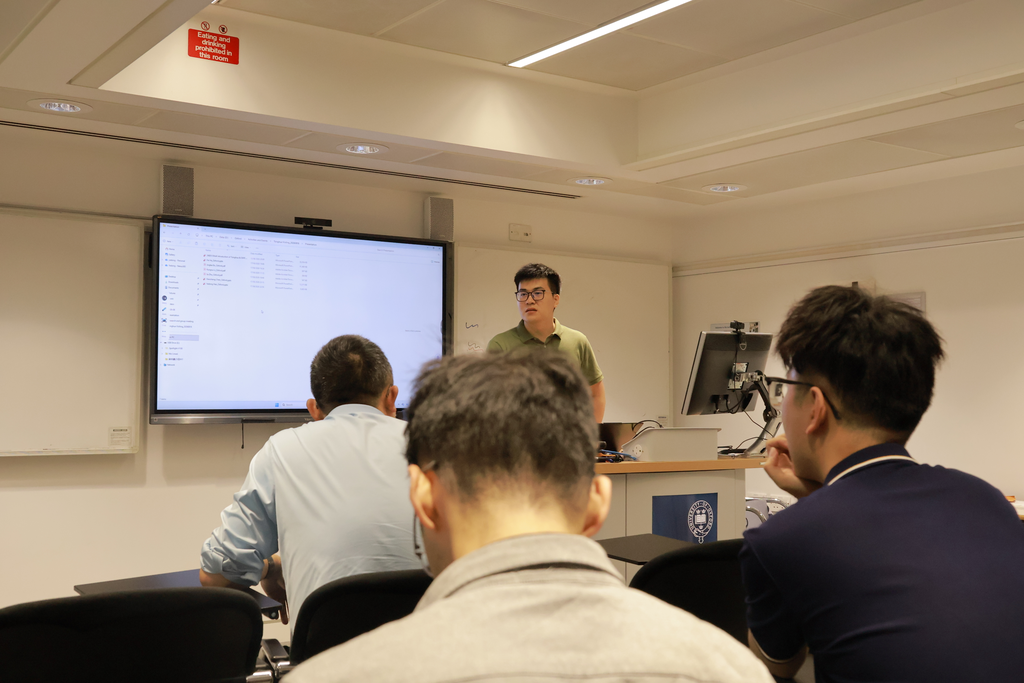
Dr Yadong Han gives the opening introduction.
During the research presentations, participants introduced work on tidal turbine design and testing, wind-turbine wakes and wind-farm optimisation, and computational materials and machine learning. The presentations highlighted the combined use of experimental studies, numerical simulation and machine-learning methods in addressing complex engineering problems and supporting technology development and industrial applications.
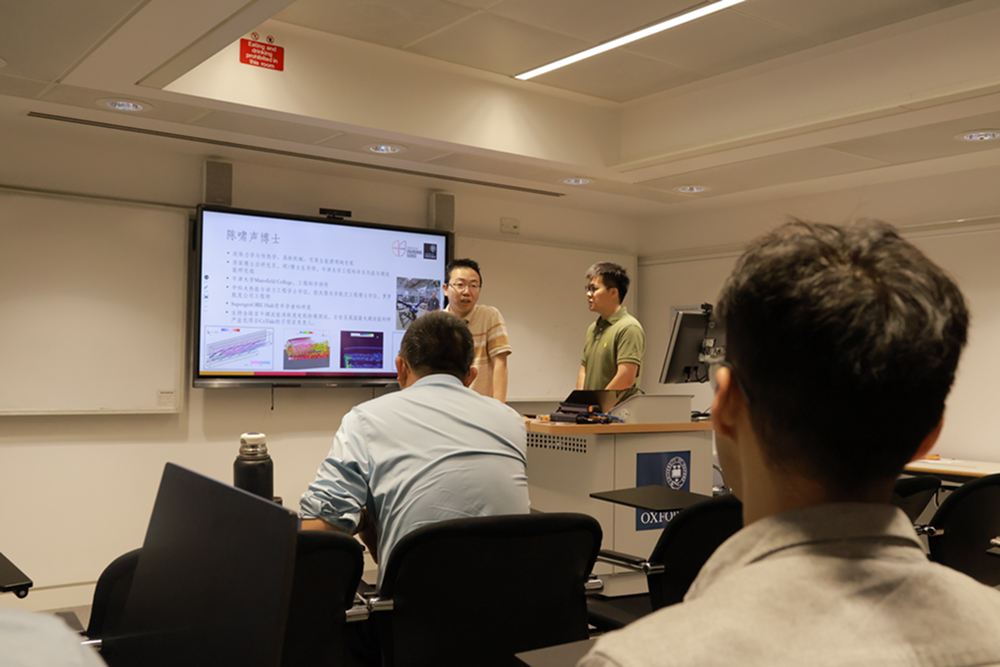
Dr Xiaosheng Chen introduces his research.
The two sides also discussed research and career development at the doctoral and postdoctoral stages. Oxford’s early-career researchers drew on their experience of international study, research grant applications and international collaboration to share perspectives on selecting research directions, applying for postdoctoral programmes and developing an academic career.
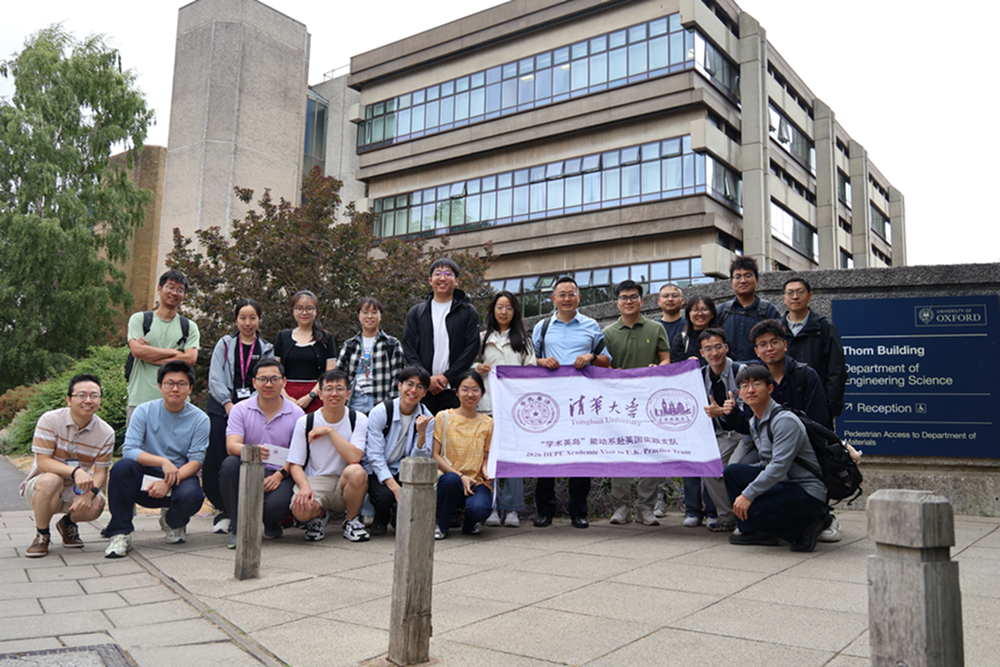
Group photo with participants from the Department of Engineering Science, University of Oxford.
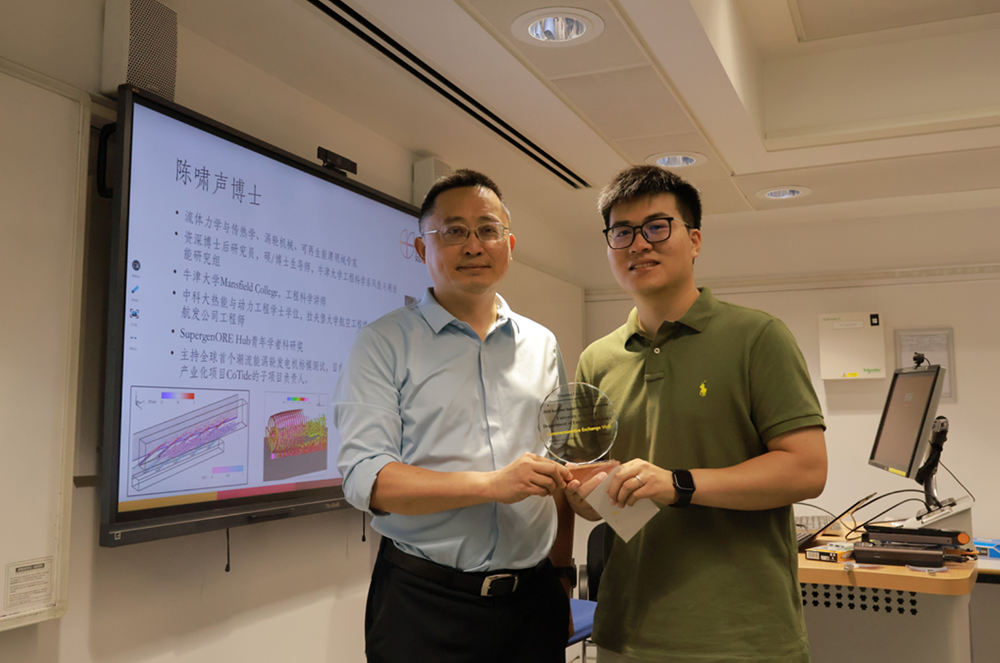
Associate Professor Ma Linwei presents a commemorative plaque to the Department of Engineering Science.
The delegation then visited the Smith School of Enterprise and the Environment, University of Oxford, for an open networking session with scholars from different countries and research backgrounds. Participants formed small discussion groups and exchanged views on energy policy and market mechanisms in China and the UK, low-carbon transition pathways, and potential opportunities for research collaboration.
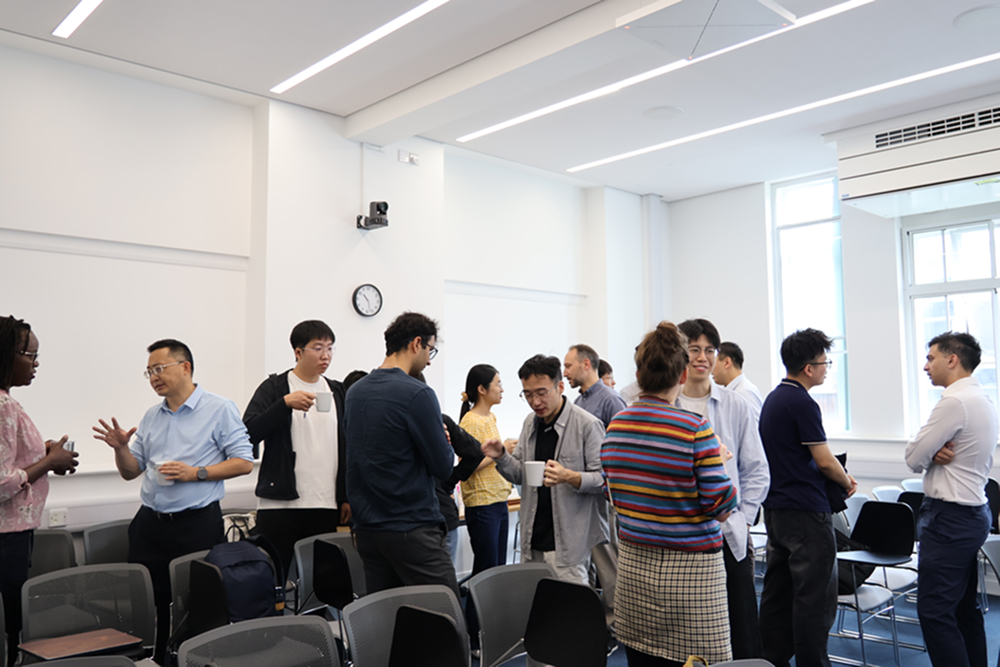
Open networking and discussion session at the Smith School of Enterprise and the Environment.
At the end of the session, Associate Professor Ma Linwei presented a commemorative plaque to the Smith School on behalf of the delegation. The delegation visited the Oxford University Museum of Natural History, where the group learned about the Museum’s history and scientific collections, bringing the visit to a close.
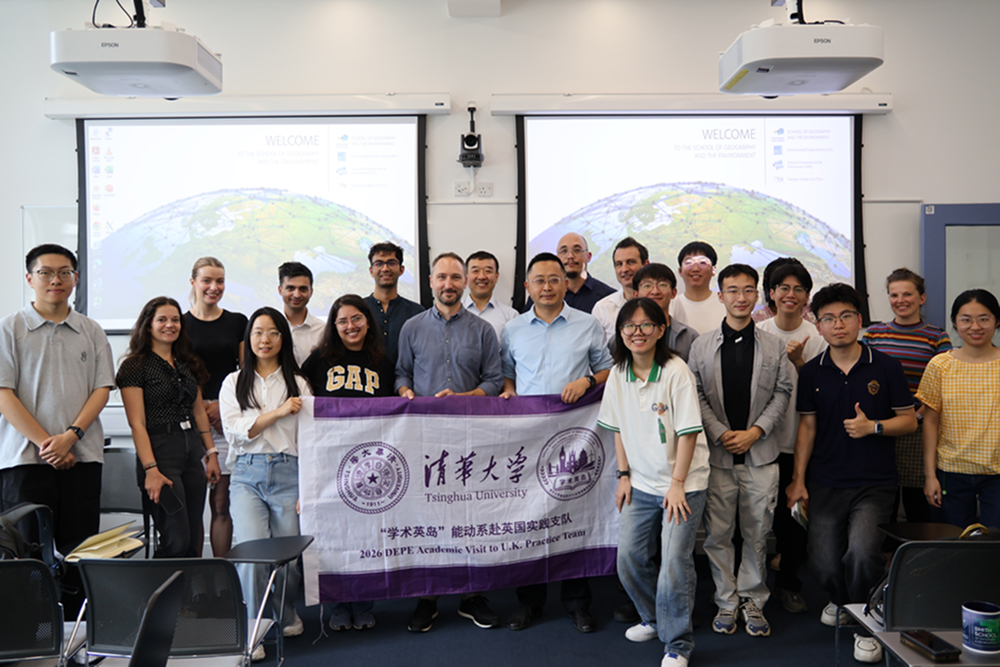
Group photo with participants at the Smith School of Enterprise and the Environment.
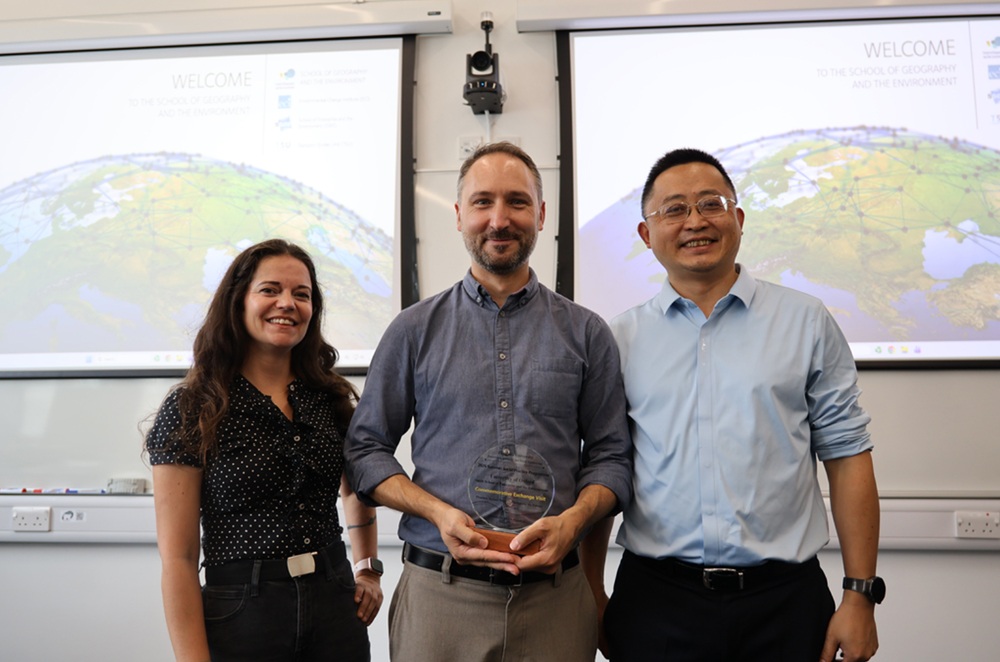
Associate Professor Ma Linwei presents a commemorative plaque to the Smith School of Enterprise and the Environment.
University of Cambridge
On 17 August, the UK Academic Exchange Delegation from the Department of Energy and Power Engineering, Tsinghua University visited the Department of Engineering at the University of Cambridge. Led by Professor Simone Hochgreb, the delegation toured the fluid mechanics teaching laboratory, combustion laboratory and aerosol laboratory, gaining an overview of the Department’s teaching and research in engineering fundamentals, hydrogen combustion, advanced optical diagnostics and aerosol measurement.
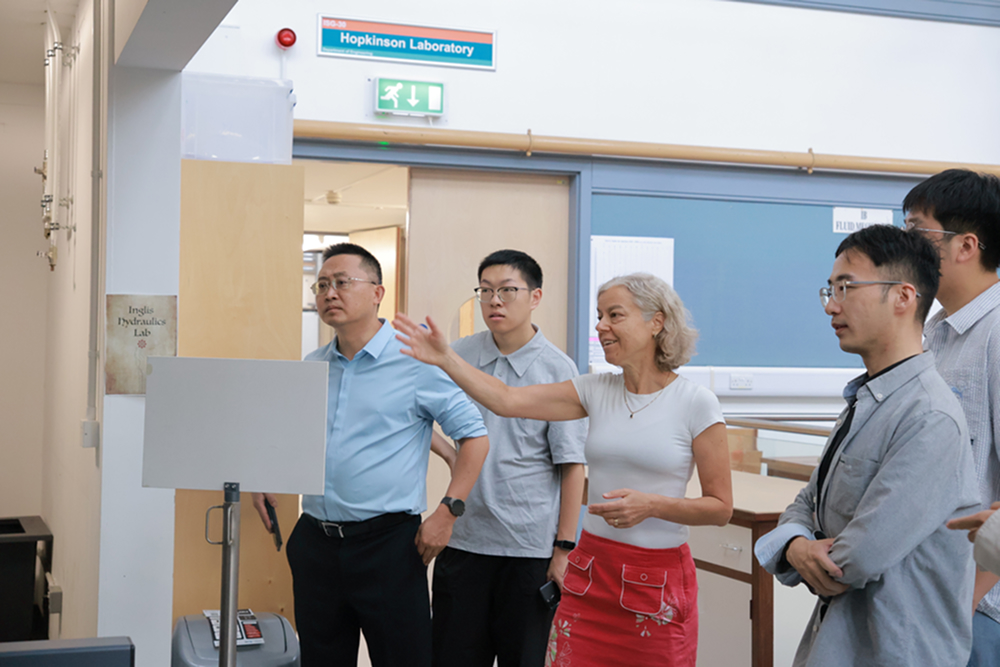
Professor Hochgreb introduces the fluid mechanics teaching laboratory.
Following the laboratory tour, Professor Simone Hochgreb gave an overview of her group’s recent research, with a focus on thermodiffusive instabilities in hydrogen flames, three-dimensional flame imaging, transient high-temperature measurement and aerosol instrumentation. The two sides also discussed the integration of experimental studies and numerical simulations.
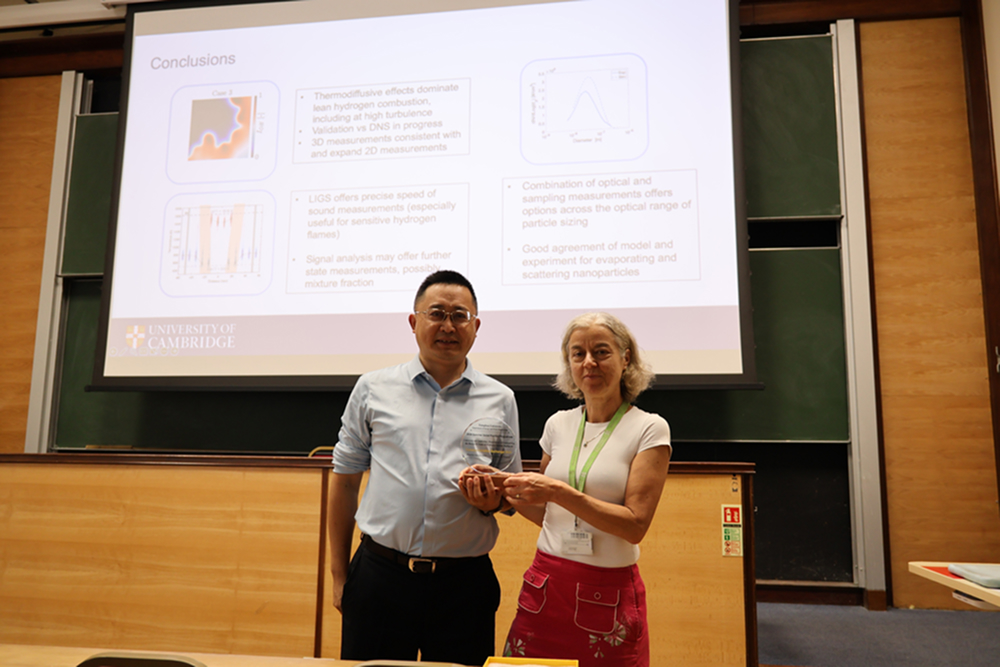
Associate Professor Ma Linwei presents a commemorative plaque to Professor Hochgreb’s group.
The delegation then met with Professor Julian Allwood’s group in the Department of Engineering. Professor Allwood introduced Cambridge’s collegiate structure and its role in fostering interdisciplinary exchange, and outlined the research philosophy of the Use Less Group: reducing energy and material use to support deep decarbonisation of industry.
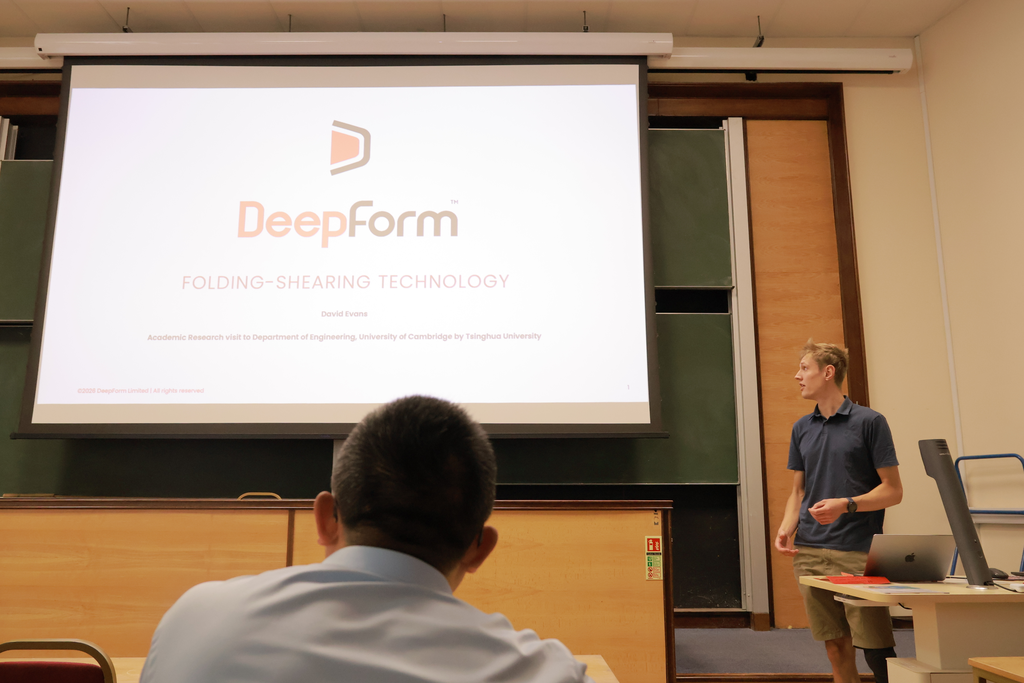
A researcher from Professor Allwood’s group gives a presentation.
During the research presentations, group members introduced work on advanced and more efficient metal pressing and forming technologies, energy-efficiency retrofits for the UK’s existing housing stock, and scrap steel recycling. These projects illustrated approaches to reducing resource consumption and carbon emissions through product design, more efficient material use and circularity. The two sides subsequently exchanged views on industrial decarbonisation and the coordination of engineering innovation and policy.
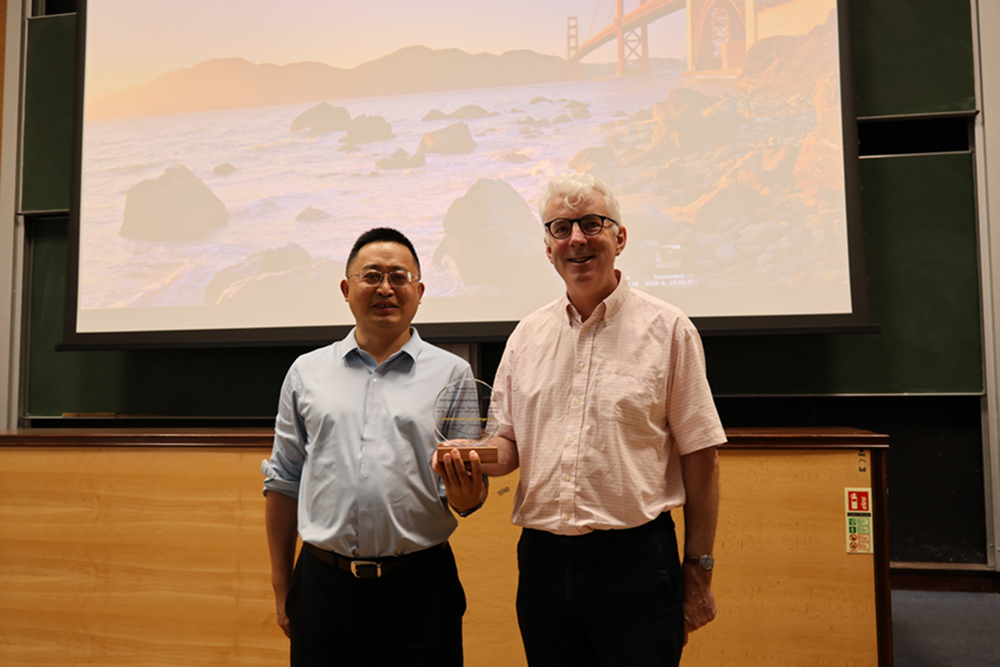
Associate Professor Ma Linwei presents a commemorative plaque to Professor Allwood’s group.
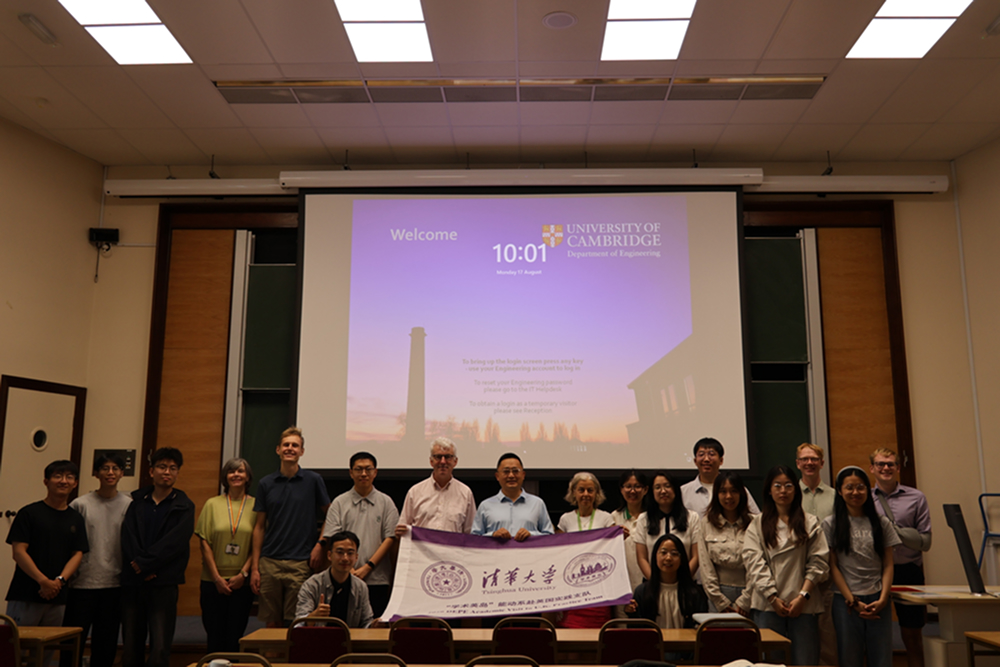
Group photo with participants at the University of Cambridge.
- END -