November 20, 2025 – The “Spanning Continents, Empowering Localities: Global Climate Cooperation and Local Climate Action” thematic forum was successfully held at the UNFCCC COP30, Blue Zone, China Pavilion.
As the global climate crisis intensifies, governments worldwide face the dual challenge of “raising ambition” and “delivering implementation.” In reality, those on the front lines of emissions reduction, green transition, and climate resilience are often not national governments, but subnational actors—provinces, states, and municipalities. These local governments are closest to socioeconomic realities and possess greater policy flexibility and innovation capacity, making them indispensable drivers in achieving global climate goals.
At the same time, international cooperation at the local level holds immense untapped potential. Amid increasingly fragmented global governance and deepening geopolitical divides, strengthening dialogue, experience-sharing, and joint action among local governments across regions can help bridge the implementation gap in global climate governance and reinvigorate multilateral cooperation. This year’s COP, held for the first time in the Amazon Basin, marks a new stage of “climate action emerging from the Global South.” It also presents a unique opportunity to advance multi-level climate governance and empower local actors.
The forum's keynote speech session featured Deborah Seligsohn, Assistant Professor of Political Science at Villanova University and Former Environment, Science, Technology, and Health Counselor at the U.S. Embassy in Beijing, who shared a systematic analysis of experiences and future pathways in China–U.S. subnational climate cooperation based on her joint research with HU Bin, Associate Professor at Tsinghua University. Based on extensive interviews with government officials, business leaders, scholars, and NGO representatives engaged in bilateral climate collaboration, their research explores how China and the United States can deepen cooperation, maintain communication channels, and strengthen trust mechanisms at the local level amid complex geopolitical dynamics. The two scholars previously released the "Research Report on China-U.S. Climate Cooperation Under New Circumstances" at COP29 based on a questionnaire survey, and this keynote can be regarded as a further extension and deepening of that work.
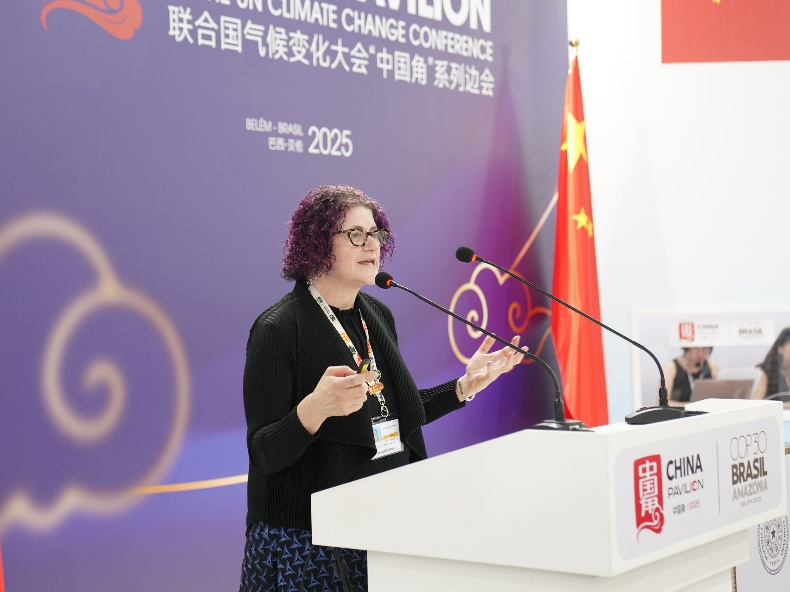
Deborah Seligsohn

Hu Bin
In the roundtable discussion brought together experts from various institutions to exchange views on successful practices and challenges in local-level climate cooperation. Panelists included LI Shuo, Director of China Climate Hub at the Asia Society Policy Institute; Dr. George Carter, Director of the Australian National University (ANU) Pacific Institute; Arvea Marieni, Director of Eco-Transition Engineering Solutions at BEAM CUBE, EU commission expert and Senior Advisor to the World Green Design Forum (WGDO); ZHU Mengye, Research Scholar at Stanford Doerr School of Sustainability and Senior Scientist with the Natural Capital Project at Stanford University; and Dr. HU Bin, Associate Professor at the Institute of Climate Change and Sustainable Development at Tsinghua University. The discussion was moderated by ZHU Xiangrong, Global Youth Ambassador of the Global Alliance of Universities on Climate (GAUC) and student representative from Tsinghua University.
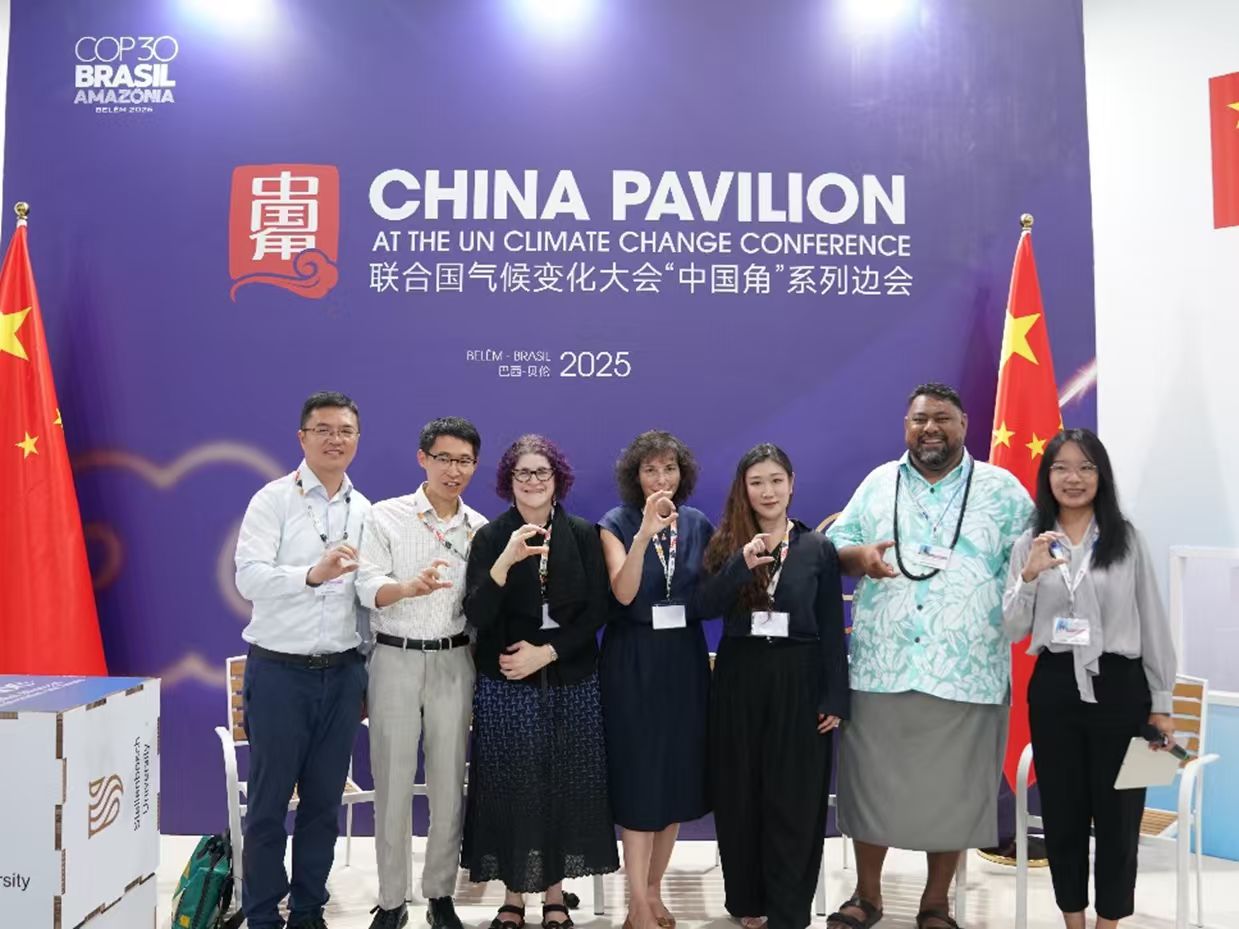
Panel Guests Group Photo
Participants broadly agreed that local-level cooperation is becoming one of the most dynamic and innovative components of the global climate governance architecture. Through mechanisms such as city alliances, regional carbon market linkages, and green industry collaboration, local governments can effectively translate macro-level climate goals into concrete, implementable actions. Looking ahead, stakeholders emphasized the need to strengthen platforms for cross-regional coordination, improve systems for policy and experience sharing, and explore pragmatic cooperation in key areas such as energy transition, sustainable infrastructure, and climate finance.
Concluding in a constructive and forward-looking atmosphere, the forum showcased the strong momentum of “local action driving global synergy” and injected renewed confidence and direction into advancing inclusive, multi-level climate governance throughout COP30.
- end -
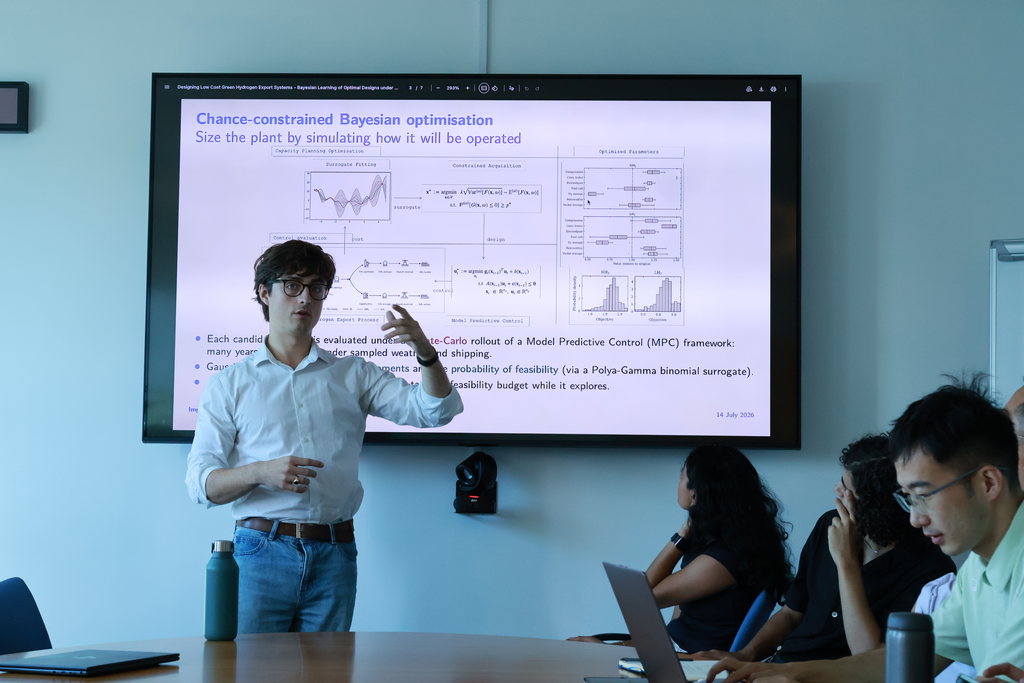
Students from the Department of Energy and Power Engineering, Tsinghua University Visit Imperial College London, the London School of Economics and Political Science, Oxford and Cambridge

LSE and Tsinghua University award twelve joint projects advancing global sustainability

Marching towards COP30 – GAUC Action Plan for Belem